Tuning Into the Void: The Obsessives Chasing Radio's Most Unsettling Mysteries
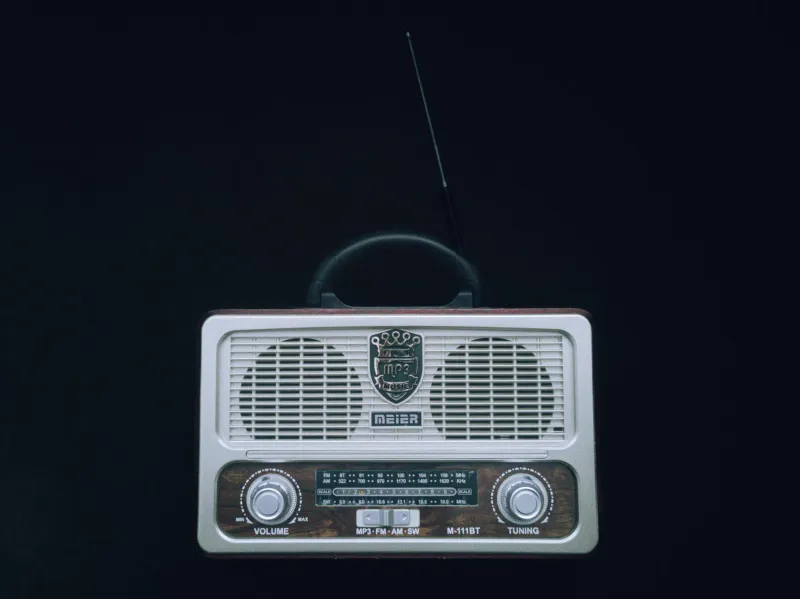
There's a frequency out there — or several, depending on who you ask — that nobody can fully explain. It broadcasts at odd hours. Sometimes it's a monotone voice reading strings of numbers in Spanish. Sometimes it's just a carrier wave with a low mechanical pulse underneath, like a heartbeat that belongs to no body. Sometimes it cuts out mid-transmission and doesn't come back for weeks.
The people listening to these broadcasts are not, for the most part, wearing tinfoil hats. Many of them are sound engineers, experimental musicians, and installation artists who became genuinely obsessed with what's hiding inside the electromagnetic spectrum — and who are now turning those obsessions into work that's landing in galleries, warehouses, and underground performance spaces from Portland to Atlanta.
The Signal Underground
Numbers stations have existed since at least World War I. The theory — largely confirmed by intelligence researchers and investigative journalists — is that they're used by government agencies to communicate with field operatives. A shortwave receiver picks up a voice reading coded sequences, the operative decodes it with a one-time pad, and the message is received without any traceable two-way communication. Clean. Deniable. Weird as hell.
But the community tracking these stations in 2024 isn't just interested in spy craft. Platforms like the Priyom.org database and the subreddit r/numberstations have become gathering points for a much broader obsession: unidentified emergency frequencies, pirate broadcasts, EVP-adjacent anomalies, and the occasional transmission that doesn't fit any known category. The Discord servers are dense with spectrograms and timestamp logs. People are pulling overnight sessions with software-defined radio rigs, cataloguing signals that may or may not have any human origin.
"There's something that happens when you sit with a receiver for long enough," says one Chicago-based audio artist who goes by the handle Null Meridian online and asked not to be named in print. "You start hearing the radio as this living thing. Like it has moods. And then you catch something you can't categorize and suddenly you understand why people go full conspiracy brain about this stuff. Not because they're irrational — because the signal is genuinely strange."
From Paranoia to Performance
What makes this particular subculture fascinating from a cultural standpoint is the way it's started bleeding into legitimate art spaces. The pipeline from obsessive hobbyist to exhibiting artist is shorter here than you might expect.
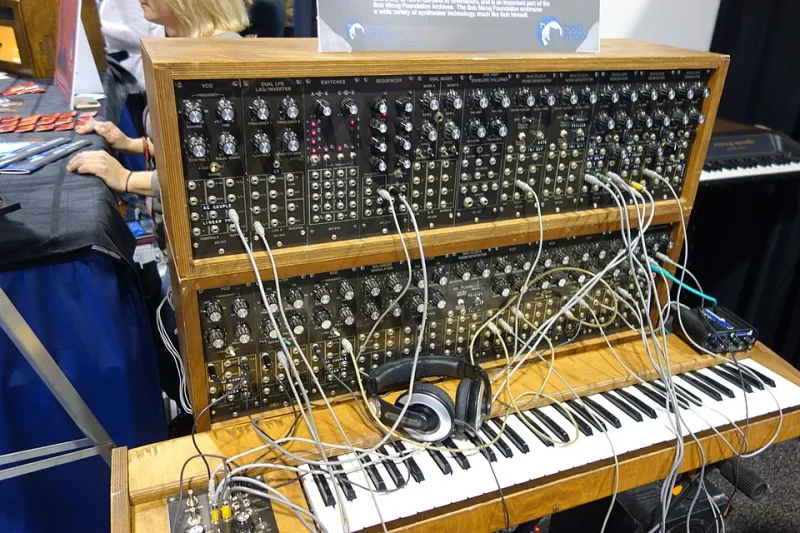
Take the work coming out of collectives in the Pacific Northwest, where a loose network of sound artists has been building installations around captured shortwave audio. One recent piece — shown at a DIY space in Seattle — used a bank of actual vintage receivers to play back recordings of unidentified transmissions in real time, mixed with granular synthesis that stretched and mutated the original signals into something almost melodic. Audience members were handed frequency logs and encouraged to try to decode patterns during the performance. Nobody cracked anything. That was kind of the point.
In New York, an artist named Kessa Thorne has been developing a long-form audio piece built entirely from recordings of the UVB-76 "Buzzer" — a Russian shortwave station that's been transmitting a repetitive buzzing tone with occasional voice interruptions since the late 1970s. The piece layers decades of archival recordings into a kind of ambient drone that shifts almost imperceptibly over its four-hour runtime. "It's basically a portrait of something that refuses to explain itself," Thorne said in a recent interview. "Which feels very relevant right now."
The Aesthetics of Not Knowing
There's a reason this stuff resonates so hard in 2024. We're living through a period of radical information overload — every question has seventeen competing answers, every event spawns a dozen alternative narratives, and the line between documented fact and engineered fiction has never been blurrier. In that context, a radio signal that genuinely cannot be explained feels almost like a relief. It's honest about its own opacity.
The artists working in this space seem to understand that intuitively. They're not trying to decode the signals — or at least, that's not the primary goal. They're interested in what it feels like to encounter something that resists interpretation. The paranoia is part of the material, not a bug in the process.
This is also where the community gets philosophically interesting, because it straddles a genuinely weird cultural divide. On one side, you have people who are convinced these transmissions are evidence of ongoing government black ops, alien communication attempts, or interdimensional leakage (yes, really). On the other, you have artists and sound theorists who are using the same raw material to ask questions about perception, pattern recognition, and the human compulsion to find meaning in noise.
Both groups are, in their own way, doing the same thing: sitting with the unknown and refusing to look away.
Hardware, Community, and the American Shortwave Revival
The technical side of this scene is worth noting, because it's feeding directly into the creative output. Software-defined radio — SDR for short — has made it dramatically cheaper and easier to scan wide swaths of the electromagnetic spectrum. A basic RTL-SDR dongle costs around thirty bucks and can pull in signals across a huge frequency range when paired with the right antenna and open-source software. That accessibility has exploded the community.
Across the US, local SDR meetups have started popping up in cities like Denver, Austin, and Pittsburgh — part ham radio club, part art collective, part conspiracy theory support group. People bring their rigs, share recordings, and argue about what they're hearing. The vibe is somewhere between a record swap and a late-night diner conversation that's gone completely off the rails in the best possible way.
Some of these groups have started running their own pirate broadcasts — transmitting experimental audio compositions on unlicensed frequencies, then listening for responses or interference patterns. It's participatory, it's slightly illegal, and it's producing some genuinely interesting audio documents that are circulating through Bandcamp and archive.org in limited editions.
Where the Signal Goes From Here
It's hard to say whether this subculture is on the verge of a mainstream breakout moment or whether it's destined to stay beautifully, stubbornly underground. There's a case for both. The aesthetics are compelling enough — the visual language of spectrograms, vintage receivers, and hand-annotated frequency logs has a certain photogenic quality that translates well to Instagram and TikTok. But the actual practice requires patience, technical knowledge, and a high tolerance for ambiguity. Not exactly viral content.
What seems more likely is a slow, steady influence — the kind where the ideas and sounds seep into broader culture without the community itself ever really getting credited. You can already hear it in certain corners of ambient and experimental electronic music, in the texture of some recent horror film sound design, in the aesthetic vocabulary of artists who've never touched a shortwave receiver but have clearly absorbed the visual and conceptual grammar of the scene.
The void broadcasts. Some people are listening. And a few of them are making something out of what they hear that's worth paying attention to — even if, especially if, it refuses to make complete sense.