Static Ghosts: The Artists Hunting America's Lost Radio Signals
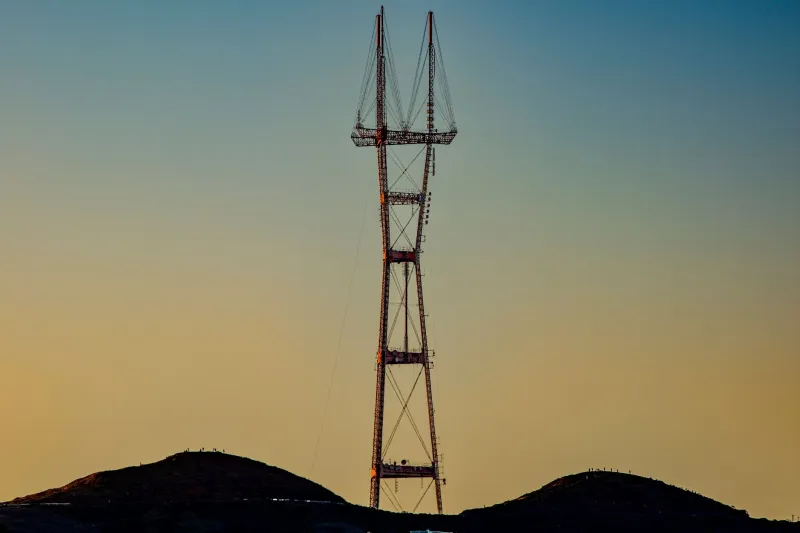
There's a field outside Belen, New Mexico, where a rusted transmission tower stands about 400 feet tall and broadcasts absolutely nothing. It hasn't for something like thirty years. But point a sensitive enough receiver at it on a clear night, and you'll still catch something — a faint, warbling hum that shifts frequency like it's breathing. Local radio enthusiasts call it the Belen Murmur. Nobody's fully explained it. And a growing community of artists thinks that's exactly the point.
Welcome to the weird, quietly obsessive world of electromagnetic archaeology — where the signal doesn't end just because the broadcast did.
The Infrastructure That Refused to Die
America built a staggering amount of radio infrastructure throughout the 20th century. Military installations, civil defense relay stations, Cold War-era emergency broadcast towers, pirate FM setups running out of converted barns in the rural Midwest — the country basically blanketed itself in transmission hardware, then slowly walked away from most of it as satellite and internet communication took over. The physical structures remain. The FCC licenses lapsed. The transmitters went dark.
Except, in a lot of cases, not entirely.
Abandoned transmission infrastructure has a strange afterlife. The towers themselves can act as passive antennas, picking up ambient electromagnetic noise and re-radiating it in unpredictable patterns. Old coaxial cables corrode in ways that create accidental oscillators. Underground ground radials — the buried copper wire systems that old AM stations used to boost signal — interact with soil conductivity and moisture in ways that produce their own low-frequency emissions. None of this is supernatural. All of it is genuinely strange.
Field recordist and installation artist Carla Deming — based out of Albuquerque — has spent the last four years driving a van loaded with software-defined radio equipment to documented dead broadcast sites across the Southwest. She calls the project Last Transmission, and the audio she's captured is genuinely unsettling. Not haunted-house unsettling. More like finding a letter written in a language you almost understand.
"There's this texture to dead broadcast space that active spectrum just doesn't have," she told us over the phone, her voice occasionally clipping over what she described as a particularly bad cell day. "It's like the difference between a room someone just left and a room that's been sealed for fifty years. The air is different."
Paranormal Meets Practical
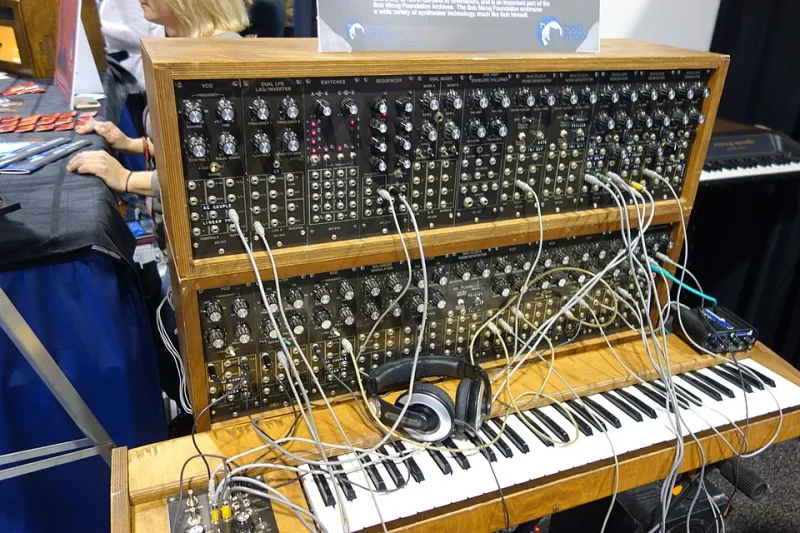
It would be easy to dismiss this whole scene as a fringe curiosity — the overlap between paranormal radio enthusiasts (a surprisingly robust community, organized largely through forums and Discord servers dedicated to EVP research and numbers station tracking) and experimental artists who'd rather work with a shortwave receiver than a DAW. But the work coming out of this intersection is legitimately compelling, and it's starting to show up in gallery contexts that take it seriously.
The Chicago-based collective Null Meridian staged an installation last spring in a converted industrial space in Pilsen that piped live feeds from six different abandoned transmission sites across Illinois and Indiana into a darkened room. Visitors moved through overlapping zones of interference, the signals mixing and beating against each other in real time. The piece didn't editorialize. It just let the frequencies exist. The response was reportedly intense — people staying for hours, describing the experience as meditative, disorienting, occasionally emotional in ways they couldn't articulate.
That emotional illegibility feels central to why this work resonates. We live in an era of hyper-legible media — everything tagged, timestamped, algorithmically sorted and served to you with a confidence that borders on arrogance. Dead signal space operates on none of those terms. It doesn't know what you want. It doesn't know you exist.
The Archive Problem
One of the more urgent threads running through this community is documentation. Abandoned transmission infrastructure is disappearing fast — towers get scrapped for metal value, underground systems corrode beyond the point of electromagnetic activity, sites get developed. Whatever spectral residue exists at these locations is, in many cases, genuinely time-limited.
This has pushed some practitioners toward a kind of frantic archival energy. The Signal Graveyard Project, a loose online collective that crowdsources GPS coordinates and SDR recordings of dead broadcast sites, has catalogued over 800 locations across 34 states since 2021. Their database is messy, inconsistent, and completely fascinating — a user-generated map of America's electromagnetic ruins, annotated with field notes that range from rigorously technical to borderline mystical.
"We're not trying to explain what any of this is," reads the project's about page, which hasn't been updated since 2022 and has two broken image links. "We're trying to make sure it gets heard before it's gone."
That archival impulse connects to a broader cultural moment. The pandemic era produced a lot of art preoccupied with absence, with the traces left by things that no longer exist. Dead signal work fits that emotional register almost too perfectly — it's literally the sound of something that used to speak, still trying.
Sound Art's Electromagnetic Turn
Within the sound art world specifically, there's been a noticeable drift toward electromagnetic source material over the past several years. Artists like Christina Kubisch have worked with electromagnetic sound for decades, but the tools available now — cheap software-defined radio dongles, open-source spectrum analysis software, consumer-grade directional antennas — have democratized the practice in ways that are producing genuinely new voices.
Deming's Last Transmission project recently culminated in a 40-minute composition built entirely from recordings made at twelve dead broadcast sites, processed minimally and arranged into something that sits somewhere between ambient music and audio documentary. It's available as a pay-what-you-want download on Bandcamp and has racked up a quietly impressive number of plays from listeners who found it through experimental music circles, paranormal podcasts, and, apparently, ASMR communities. Make of that last one what you will.
The piece doesn't try to be spooky. That's what makes it work. It treats the source material with a kind of patient curiosity — here's what the electromagnetic residue of a 1974 AM country station in rural Texas sounds like in 2024. Make of that what you will.
Where the Signal Actually Goes
There's a philosophical dimension to all of this that the best practitioners seem genuinely interested in sitting with rather than resolving. Radio signals, at broadcast power, travel outward essentially forever — attenuating, yes, but never fully stopping. The first commercial radio broadcasts from the 1920s are, in some technical sense, still moving through space, just incomprehensibly faint. The local, earthbound residue of dead infrastructure is a different phenomenon, but it rhymes with that larger strangeness.
We built a civilization of voices projected into the air, and then we mostly stopped listening to what the air was doing with them.
The artists working in this space are, at minimum, paying attention. And the work they're making from that attention — strange, patient, unclassifiable — feels like exactly the kind of thing that deserves to be heard while there's still something left to hear.