Less Is the Whole Point: How Creative Constraints Are Outpacing Unlimited Resources
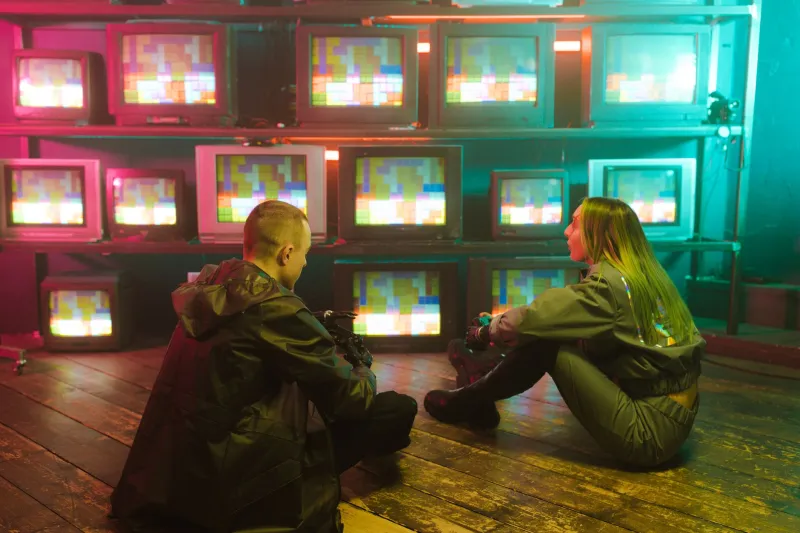
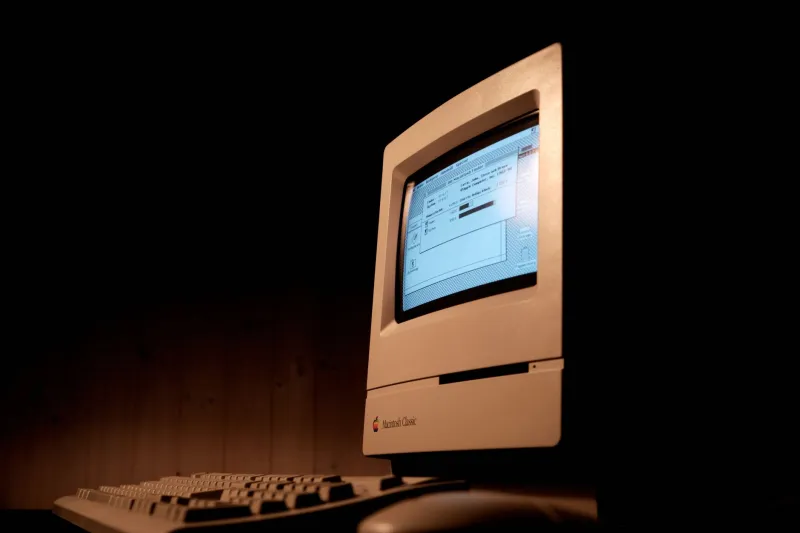
There's a certain kind of creative paralysis that comes with infinite possibility. Open a blank 4K timeline in a fully licensed suite of professional tools, every plugin imaginable, a hard drive with room for geological epochs of footage — and suddenly, nothing. The cursor blinks. The canvas stays white. The freedom is, somehow, the problem.
Now flip that. Give yourself a 500-kilobyte file limit, a 16-color palette, and a compression codec from 2003. Suddenly your brain catches fire.
This isn't a new observation — artists and theorists have been circling the productive power of constraint since at least the Oulipo movement in the 1960s — but something specific is happening right now, in 2024, that makes it feel urgent and genuinely new. A loose but identifiable scene of digital creators is actively choosing degradation. Not as nostalgia. Not as irony. As method.
The Ceiling That Became a Floor
When Mara Chen started posting her video work to a private Discord server earlier this year, she wasn't trying to make a statement. She was just broke. "I had this ancient laptop that could barely run a browser without overheating," she says. "So I started encoding everything at the lowest possible settings just to get it to export without crashing."
What came out looked like video being digested by something. Faces dissolved into pixel-block approximations of themselves. Motion left ghostly smears across the frame. Colors collapsed into four or five dominant hues that somehow felt more emotionally precise than anything she'd produced with her previous setup.
She started intentionally replicating the effect even after she got access to better hardware. "There was something about working within those limits that forced me to think about every single frame as a discrete decision," she explains. "When you can render anything, you stop asking whether you should."
This is the paradox at the center of what some people are calling the bandwidth aesthetic — a loose philosophy, more sensibility than movement, built around the idea that technical restriction generates creative density rather than diminishing it.
Compression as Composition
The technical mechanics here are worth understanding, because they're not just aesthetic choices — they're generative systems.
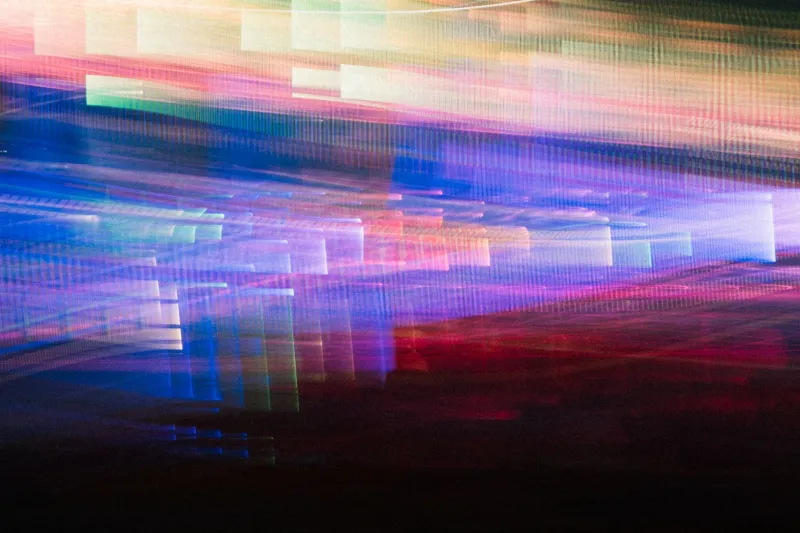
When you heavily compress a video file, you're not just making it smaller. You're forcing the codec to make decisions about what visual information is worth preserving. Block artifacts appear where the algorithm couldn't resolve motion cleanly. Banding emerges in gradients. Colors shift. The machine is, in a sense, editing your work — and if you understand how it edits, you can compose for the compression.
Filmmakers and visual artists working in this space talk about learning the grammar of degradation. They're not just accepting artifacts; they're anticipating them, building images that will transform in specific ways when the codec processes them. It's closer to printmaking than digital production — you're working with a medium that talks back.
Audio producers have been doing a version of this for decades with lo-fi hip hop, cassette recording, and vinyl emulation. The crackle isn't incidental; it's structural. It tells you where you are in time and space. The bandwidth aesthetic extends that logic into every visual and interactive medium it can reach.
The 1-Bit Canvas
Colorwise, the most extreme practitioners are working with palettes that would make a Game Boy blush. There's a whole micro-scene of illustrators and graphic artists producing work in strict 1-bit (black and white only) or with palettes capped at four to eight colors — not because the tools limit them, but because they've chosen the limit as the starting point.
The results are striking in a way that's hard to fully articulate. There's a kind of pressure to the imagery. When you can't rely on tonal gradation to create depth or mood, you have to build those things structurally, through composition and contrast. The work tends to be more spatially aggressive, more graphically decisive. It commits.
"Unlimited color is actually a really easy way to avoid making choices," says Portland-based illustrator Dev Okafor, who works exclusively in a four-color CMYK-inspired palette for his digital work. "You can always just adjust the hue, add a gradient, soften something. But when you've got four colors and that's it, every decision is load-bearing."
His work has a density and legibility that reads instantly even at thumbnail scale — which, in a media environment where most images are consumed at the size of a postage stamp on a phone screen, is not nothing.
Why Abundance Makes Bad Art (Sometimes)
This is going to sound harsh, but: a lot of high-production content is boring.
Not technically. Technically it's often extraordinary. But technically extraordinary and genuinely interesting are different axes, and they don't always intersect. The visual language of prestige streaming, of blockbuster game cinematics, of premium brand content — it's polished to a degree that starts to feel frictionless in a bad way. Nothing catches. Nothing snags your attention and holds it at an angle you didn't expect.
Constraint creates friction. And friction, in the right amount, is what makes something memorable.
This is why a pixelated indie game can hit emotionally harder than a photorealistic AAA title. Why a lo-fi podcast recorded in someone's closet can feel more intimate than a professionally produced studio show. Why a zine photocopied on a machine that's clearly running low on toner can communicate urgency that a glossy magazine can't manufacture.
The signal-to-noise ratio shifts when resources are limited. Creators stop defaulting to production value as a substitute for content. They have to mean every choice.
The Intentional Downgrade
What's interesting about the current moment isn't just that people are working with constraints — it's that they're choosing them in a cultural context that has never offered more abundance. Streaming libraries of incomprehensible scale. AI tools that can generate polished imagery in seconds. Free access to professional-grade software that would have cost tens of thousands of dollars a decade ago.
To deliberately step back from all of that and encode your video at 240p, or design your site to load in under 50 kilobytes, or record your album on a four-track cassette machine — that's not a workaround. It's a position.
It says something about what you think art is for. That it's not a showcase for capability. That the interesting thing isn't what you can do but what you choose to do with less. That the void — the gap between what the medium can technically achieve and what you're asking it to do — is where the actual work happens.
Voidcast has been tracking this sensibility for a while now, and it keeps getting more interesting, not less. The bandwidth aesthetic isn't a trend with an expiration date. It's a response to something structural about how digital abundance is starting to feel — overwhelming, undifferentiated, somehow both everything and nothing.
The artists working in compressed formats and crushed palettes and degraded signals are asking a real question: what survives when you take everything away?
The answer, more often than not, is something worth watching.