Offline by Design: The Creators Who Fled the Grid and Found Something Better
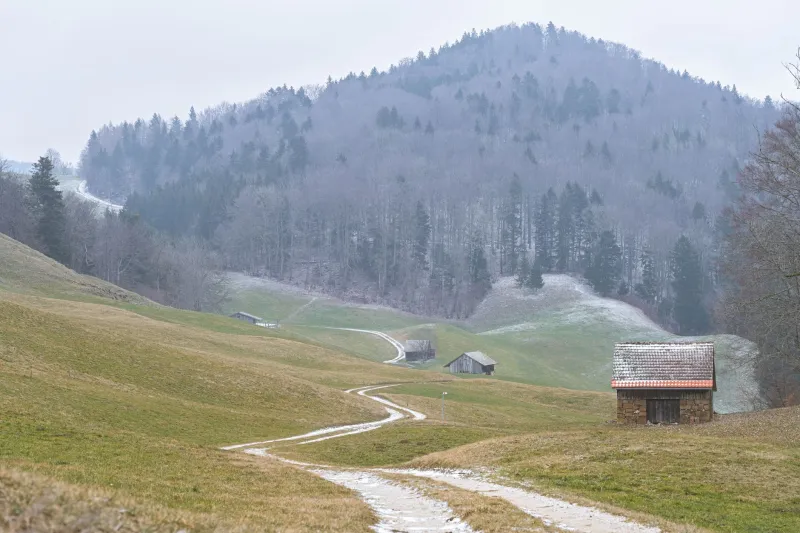
Somewhere in the hollows of rural West Virginia, a musician named Dessa Vark is recording an album on a laptop that hasn't seen a stable internet connection in three weeks. She's not complaining. She planned it this way.
"The first 48 hours felt like withdrawal," she says over a patchy phone call that drops twice. "Then something shifted. I stopped checking what everyone else was making and started actually making."
Vark is part of a loosely connected movement — call them bandwidth prophets, dead zone disciples, connectivity refuseniks — of digital creators who are deliberately seeking out America's most underserved corners of the internet landscape and treating them like sacred ground. Rural Appalachia. The high desert stretches of eastern Oregon. Forgotten agricultural towns in the Kansas plains where 4G is still aspirational. These aren't vacation spots. They're workshops.
The Constraint Is the Point
For most of the tech industry, poor connectivity is a problem to engineer away. Starlink promises to beam satellite internet to every ranch and ridge. Telecom companies run ads about closing the digital divide. And sure, equitable access matters — nobody's arguing otherwise. But a countermovement is quietly forming among creators who think the divide, at least temporarily, might be worth inhabiting.
The logic isn't anti-technology. It's more nuanced than that. When you can't stream reference tracks, scroll through Instagram for mood boarding, or get real-time feedback from followers, you're forced back onto what you actually know, feel, and hear. The algorithm — that invisible curatorial hand that nudges every creator toward whatever's currently performing well — loses its grip.
Visual artist Tomás Reinholt spent six months in a small town in northern Minnesota with download speeds that made YouTube basically non-functional. He emerged with a body of work that his New York gallerist called "unplaceable" — which, in the current art market, is apparently high praise.
"I couldn't see what trends were doing," Reinholt explains. "So I stopped chasing trends. I started chasing whatever was in front of me. The textures of the place. The quality of light at 4 p.m. in November. The specific boredom of a town where the diner closes at 7."
The work that came out of that period looks nothing like what was circulating on art Twitter at the time. That's exactly why people are paying attention to it now.
Dead Zones as Creative Infrastructure
There's a practical dimension to this too, beyond the philosophical. When your internet is unreliable, you develop different workflows. You download everything you might need before a connection window closes. You work in longer, uninterrupted stretches instead of the constant tab-switching that defines most modern creative sessions. You make decisions without being able to Google your way out of uncertainty.
Marcellus Fenn, a producer who makes what he describes as "swamp electronics" — a murky, humid strain of ambient music that sounds like it was recorded inside a thunderstorm — spent two summers at a fishing cabin in coastal Louisiana with connectivity so spotty he had to drive twenty minutes to a McDonald's parking lot to upload finished files.
"That drive became part of the process," he says. "I'd finish something, sit with it for the whole drive, and by the time I got to the parking lot I either still loved it or I'd already talked myself out of it. No instant gratification. No instant validation. Just the work and the road."
Fenn's releases have a patience to them that feels increasingly rare. Long fade-ins. Sounds that take minutes to fully reveal themselves. His listeners, he says, tend to be unusually devoted — people who found his music and felt like it was made specifically for them, rather than optimized for the widest possible audience.
The Aesthetics of Interrupted Signal
What's interesting is how the conditions of limited connectivity are bleeding into the actual texture of the work being made in these places. It's not just that the creative process changes — the output looks and sounds different.
Photographer and video artist Lena Croft spent a residency in a small town in rural New Mexico where the nearest cell tower was fifteen miles away. She started shooting on older digital equipment that she'd previously retired, partly because she couldn't easily download firmware updates or access cloud storage. The resulting images have a quality she struggles to name — a kind of unprocessed immediacy that her more connected work lacks.
"There's no polish that comes from second-guessing yourself against the internet," she says. "You're just deciding. And those decisions have a different energy."
Others are making the interrupted signal itself part of the aesthetic. Musicians are incorporating the artifacts of low-bandwidth audio calls — the compression, the dropout, the robotic stuttering of a voice cutting in and out — as deliberate sonic textures. Graphic designers are leaning into the visual grammar of slow-loading images: the progressive JPEG reveal, the placeholder gray box, the pixelation of a thumbnail that never quite resolved.
The Privilege Problem (Yes, We're Saying It)
It would be dishonest not to name the obvious tension here. The ability to choose disconnection — to treat poor connectivity as a creative retreat rather than a daily frustration — is a form of privilege. For millions of Americans in rural and tribal communities, unreliable internet isn't a vibe, it's a barrier to healthcare access, education, and economic opportunity.
The creators in this piece are largely aware of this, and the better ones are careful about how they talk about it. Vark is explicit: "I'm a tourist in these conditions. The people who actually live here aren't romanticizing anything. I try not to either."
There's a version of this story that becomes extractive — creatives parachuting into underserved areas, harvesting the aesthetic texture of hardship, then leaving. The more thoughtful practitioners seem genuinely invested in the communities where they work, spending money locally, building relationships, sometimes staying longer than originally planned.
But the tension is real and worth sitting with.
What Gets Made When the Feed Goes Dark
Ask any of these creators what they actually miss about constant connectivity and the answers are surprisingly specific. Not inspiration — they have more of that. Not community — they stay in touch, just more deliberately. What they miss, mostly, is the comfort of knowing what everyone else is doing.
And maybe that's the point. The void that opens up when the feed goes dark isn't empty — it turns out to be full of something that was always there, waiting under the noise. Whether that's worth a six-hour drive to a cabin with no WiFi is a personal calculation. But the work coming out of those cabins is starting to turn heads.
The signal breaks. And in that break, apparently, something honest gets made.
Voidcast is always watching the frequencies nobody else is tuned to.