Deliberately Defective: The Gen Z Artists Who Want Their Machines to Fail
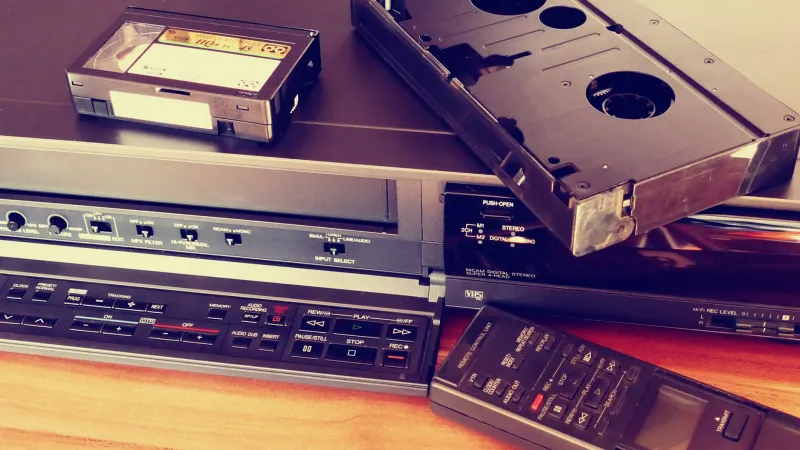
There's a listing on eBay right now for a JVC VCR described as "powers on, tracking shot, image distortion, sold as-is." The seller probably typed that out expecting zero interest. Instead, it has fourteen watchers and a bid war quietly heating up in the background. The buyers aren't collectors chasing a working unit. They're artists. They want the distortion. They want the tracking shot. They want the machine to misbehave.
This is the analog rebellion, and it's weirder and more intentional than most people realize.
Broken by Design, Not by Accident
Walk through any major art school right now — RISD, CalArts, SVA, you name it — and you'll find at least one studio where someone has a tape deck running that sounds like it's actively dying. Warped playback, chewed magnetic oxide, heads so worn they smear audio into something barely recognizable. The students using this equipment aren't frustrated. They're thrilled.
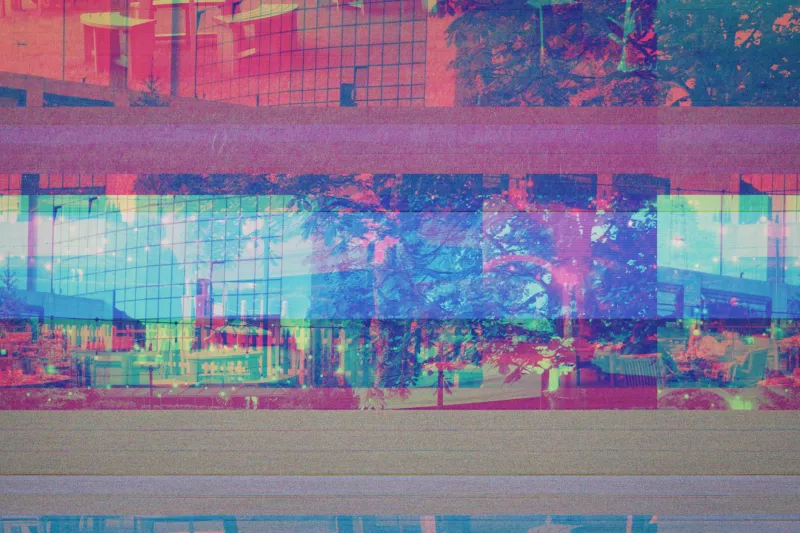
The distinction worth drawing here is between nostalgia and intentionality. The cassette revival of the early 2010s was largely about warmth and sentiment, indie bands releasing limited runs because physical media felt personal. What's happening now is something colder and more calculated. Young creators are actively seeking out machines that don't work correctly because malfunctioning hardware generates outputs that no plugin, no VST, no AI model can replicate with any authenticity. Degradation has texture. Failure has a signature.
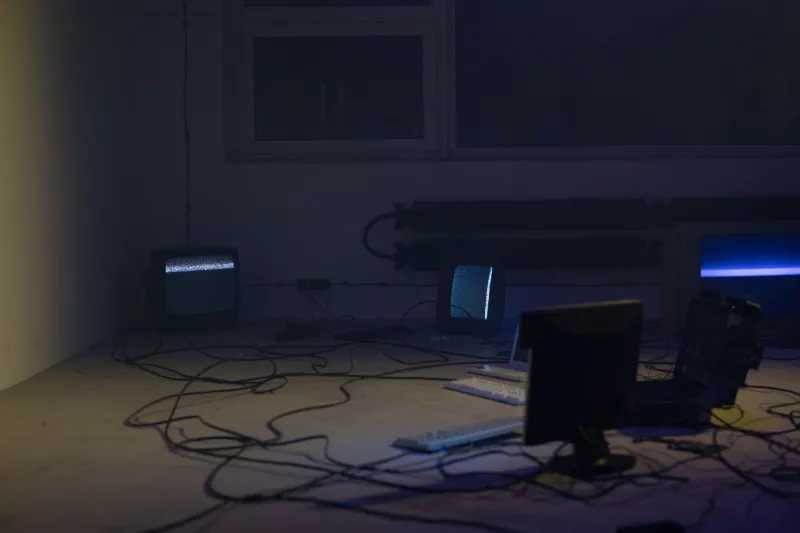
Mara Osei, a 23-year-old video artist based in Philadelphia, has built an entire practice around what she calls "machine grief" — coaxing dying equipment into producing images that hover somewhere between recognizable and totally abstract. Her setup includes three VCRs in varying states of disrepair, a camcorder with a cracked CCD sensor, and a reel-to-reel she found at a Goodwill in South Philly with a motor that runs inconsistently depending on temperature. "I'm not trying to make something vintage-looking," she says. "I'm trying to make something that couldn't exist any other way. When that motor slows down, the pitch drops in a way that's completely unrepeatable. You can't program that. You can't download it."
The Market for Malfunction
The secondhand market has noticed. Thrift stores in cities with dense creative populations — Brooklyn, Los Angeles, Chicago, Austin — have started pricing broken tape equipment higher than they used to, because the demand has shifted. A non-functional Betamax that would've been a hard sell five years ago now moves fast. Facebook Marketplace listings for "untested" electronics get more engagement than working units in some categories. Sellers have started learning the language: "produces image artifacts," "audio dropout present," "heads need cleaning (or don't)." That last parenthetical is doing a lot of work.
Online communities dedicated to this practice have popped up across Discord and Reddit, with threads cataloging specific models known for producing interesting failure modes. The Panasonic AG-1980 gets mentioned constantly for its particular brand of color bleeding. Certain Fisher-brand cassette decks are prized for a motor flutter that adds what devotees describe as a "breathing" quality to recorded audio. These aren't accidents being tolerated — they're features being sought.
Resistance as Aesthetic
It's tempting to frame this purely as a tech backlash story, and there's definitely something to that reading. Gen Z came of age inside platforms engineered for frictionlessness — Spotify's seamless streaming, TikTok's infinitely optimized feed, AI tools that smooth out every rough edge before you even notice it was there. The dominant aesthetic of digital culture is competence. Everything loads fast, sounds clean, looks sharp. Imperfection gets filtered out at the infrastructure level.
Broken machines are the opposite of that. They introduce variables no one controls. They fail in ways that are specific to their individual history — a tape deck that sat in someone's garage for twenty years in humid Georgia heat fails differently than one that spent the same time in a dry Arizona storage unit. That history is embedded in the malfunction. The machine carries its own biography.
DJ and producer Felix Drummond, who records under the name Slurgate and is based out of Detroit, has been incorporating degraded tape into his productions for about three years. He's explicit about what he's pushing against. "Every piece of software I use is trying to help me," he says. "Auto-correct, pitch correction, noise reduction — it's all making decisions for me. When I run something through a tape deck that's half-dead, the machine is making decisions for me too, but they're not optimized decisions. They're broken decisions. And broken decisions are interesting."
His last release included a track built almost entirely around the sound of a cassette player eating a tape — the mechanical crunch, the warble as the motor struggled, the eventual silence when the ribbon snapped. It's not comfortable listening. It's not supposed to be.
The Craft of Controlled Chaos
There's a paradox at the center of this movement that its practitioners are pretty open about: using broken machines intentionally requires a lot of skill. You can't just grab a dead VCR and expect something interesting to happen. You have to understand how it fails, what conditions produce which kinds of degradation, how to coax a machine toward the specific malfunction you want without pushing it all the way to total silence.
Osei describes spending weeks with a new piece of equipment before she uses it in any serious way. "You have to learn its personality," she says. "Every broken machine fails differently. Some fail loudly, some fail quietly. Some get worse in the heat. You're not controlling it, but you're learning to work with its particular kind of out-of-control."
This is where the analog rebellion starts to look less like a rejection of craft and more like a very specific redefinition of it. Mastery here isn't about technical precision — it's about developing an intimate understanding of entropy. It's about knowing your tools well enough to predict, at least roughly, how they'll betray you.
What Comes Out the Other Side
The work being produced inside this movement is genuinely hard to categorize, which might be the point. Osei's video pieces get shown in gallery spaces but also circulate on Instagram, where the algorithm seems briefly confused by them before inevitably routing them toward the right audience. Drummond's music exists on Bandcamp and occasionally gets licensed for short films and art installations. None of it sounds like it was made to fit anywhere in particular.
That friction — between the work and the platforms designed to distribute it — might be exactly what these artists are after. A piece of media that resists easy categorization, that carries the physical evidence of its own making, that could only have been produced by a specific broken machine in a specific moment of controlled failure: that's not a product. That's something else.
The machines are dying. The artists are watching carefully, waiting to see what shape the death takes. And then they're recording it.