Hidden in the Frames: The Designers Paid to Bury Secrets in Your Screen
The Coke Flash That Started It All
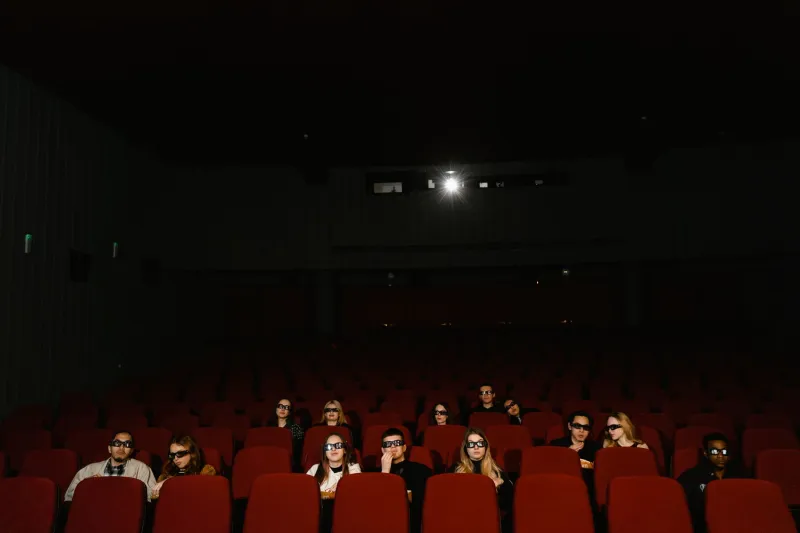
In 1957, a market researcher named James Vicary stood in front of reporters and claimed he'd flashed the phrases "Drink Coca-Cola" and "Eat Popcorn" on a New Jersey movie screen for a fraction of a second — too fast to consciously register. Concession sales, he said, jumped. America lost its mind. The FCC banned subliminal ads outright by 1974, and Vicary later admitted he'd essentially made the whole thing up.
Here's the thing, though: the hoax worked better than the truth ever could. The idea that someone might be hiding messages in the images you consume became permanent cultural furniture. And seventy years later, it turns out the hiding never actually stopped. It just got quieter, weirder, and — honestly — a lot more fun.
Confessions From the Timeline
Ask around the motion design world and a pattern emerges. A designer we'll call Marcus (he asked us to keep it vague — the NDAs are real) spent six years doing broadcast graphics for national ad campaigns. Somewhere around year three, a client requested a single frame of their competitor's logo, flipped and darkened, buried in a 30-second spot.
"Nobody would ever see it," he told us. "That wasn't the point. The point was that the client knew it was there. It's like a talisman. Ad people are extremely superstitious and extremely bored, and that combination produces some strange homework."
Other stories are less corporate and more mischievous. A title sequence designer for a streaming series described hiding the plot's ending inside a two-frame flicker in the opening credits. A game UI artist admitted to stashing her dog's name in the specular map of a vending machine texture. None of these are "buy more" commands whispered to your lizard brain. They're gifts, dropped into the noise for whoever's obsessive enough to scrub frame by frame.
And plenty of people are exactly that obsessive.
Frame-Stepping as a National Pastime
The modern subliminal hunt isn't paranoid — it's participatory. Reddit threads dedicated to pausing trailers at the exact right millisecond have become a genuine fan economy. Studios know it. When a major superhero film hides a logo in a blink-and-you-miss-it shot, that's not subliminal messaging in the 1957 sense. That's a scavenger hunt, engineered, distributed, and monetized.
The distinction matters, and it's where the story gets interesting. Classic subliminal advertising assumed audiences were passive targets. Today's hidden-frame culture assumes the opposite: that the audience is an active investigator, and that the investigation is the entertainment. The hidden layer isn't manipulation anymore. It's lore.
Streaming ads have caught on too. Several recent campaigns have built entire second narratives — frame-level Easter eggs that only resolve when viewers compile their findings collectively. One soda brand essentially crowdsourced its next commercial from TikTok users who decoded a QR code hidden in a single frame of a Super Bowl spot. The message wasn't hidden from you. It was hidden for you.
Why We Can't Look Away
There's a deeper reason this aesthetic refuses to die, and it rhymes with everything else Voidcast covers: in an era where images are infinitely reproducible and instantly forgettable, a secret gives an image weight. A frame that most people never see becomes sacred precisely because of its invisibility. It's scarcity economics applied to attention.
Vicary's hoax sold us a nightmare — the fear that media could program us without consent. Six decades later, we've remade that nightmare into a game with leaderboards. The advertisers who understand this aren't hiding commands. They're hiding treasures.
The signal breaks. Some of us were always going to go looking for what got buried in the static.