Ghost Data: The Artists Decoding the Secret Lives Buried Inside Every File You've Ever Made
Every photograph you've ever taken carries a passenger. Latitude and longitude. The exact millisecond the shutter fired. The make and model of the device. The software version that processed the light. None of it visible. All of it there.
For most people, this invisible layer of information is just exhaust — technical residue that accumulates without thought and gets ignored without guilt. But for a growing community of artists, hackers, and conceptual weirdos operating at the fringes of digital culture, that exhaust is the whole point. They call themselves, loosely, metadata mystics, though the label is more vibe than manifesto. What unites them is a shared conviction: the most unguarded, most revealing, most genuinely human writing on the internet isn't in any caption or post or essay. It's in the parts of the file nobody thinks to look at.
The Invisible Infrastructure of Everything
Let's get specific about what we're talking about, because the scope is genuinely wild once you start pulling threads.
EXIF data — short for Exchangeable Image File Format — is the metadata embedded in digital photos by cameras and phones. It logs technical settings, sure, but it also captures GPS coordinates, device serial numbers, and timestamps accurate to the second. A single JPEG from a family vacation contains a precise geographic record of where your family stood, what time the sun hit a certain angle, and what version of iOS was running in your pocket. That's not a photo. That's a surveillance document with good lighting.
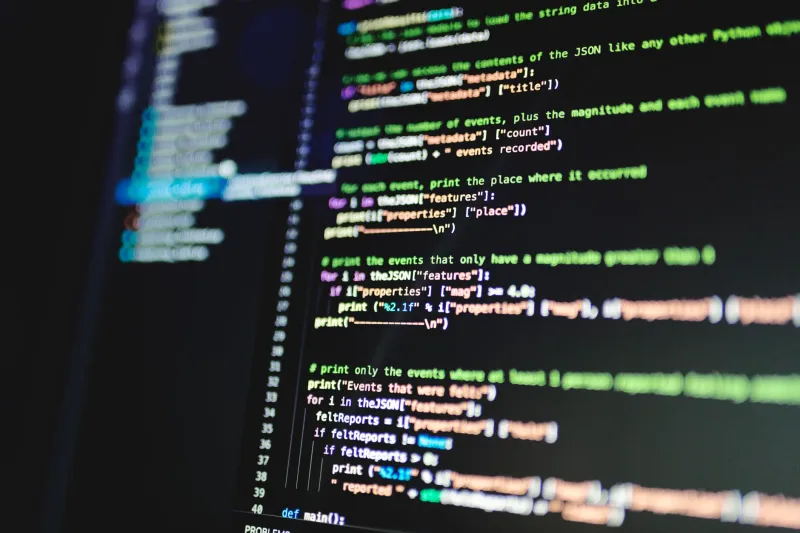
Then there are code comments — the annotations developers leave inside software for themselves and each other. These are never meant for end users. They range from purely functional ("this loop handles edge cases for null inputs") to existentially unhinged ("I have no idea why this works, don't touch it, written at 3am, God help us all"). Dig through enough open-source repositories on GitHub and you'll find confession, exhaustion, dark humor, and occasional flashes of genuine beauty, all buried in files that most people interact with every day without knowing any of it exists.
Document metadata tells you who created a file, when they created it, and sometimes — awkwardly — who else has edited it and what earlier drafts contained. Legal documents have been cracked open by journalists who noticed the revision history. Political scandals have surfaced through careless metadata hygiene. The file knew things the sender forgot it knew.
Found Text for the Digital Age
Artists have always raided the archive. Cut-up poetry, found footage film, collage — the practice of taking existing material and recontextualizing it into something new is basically a pillar of 20th-century art. What the metadata movement is doing feels like a direct descendant of that tradition, except the archive is everywhere and most of it is technically invisible.
New York-based artist and programmer Yael Ostroff (who goes by the handle null_trace in most of the forums where this work circulates) spent eight months collecting discarded hard drives from thrift stores and e-waste bins across the five boroughs. Not to recover personal data — that would be invasive and, frankly, illegal — but to extract and exhibit the structural metadata: file creation timestamps, software fingerprints, folder architecture. The resulting installation, shown at a Brooklyn warehouse space last spring, mapped thousands of anonymous digital lives as timelines of creation and deletion, rendered in dim amber light across a forty-foot wall.
"There's this moment," Ostroff told a small zine that covered the show, "where you realize the file system is basically a diary that nobody chose to keep. The shape of how someone organized their desktop tells you something real about how their mind worked."
In Portland, a collective called Residual Signal has been doing something adjacent but weirder: they feed raw EXIF data from Creative Commons images into text-to-speech software and perform the output as spoken word. Coordinates become addresses. Timestamps become dates with no context. Camera models become brand names floating free of meaning. It sounds like a fever dream narrated by a bureaucrat, and audiences have described it as unexpectedly moving.
The Programmer as Unintentional Poet
Code comments deserve their own moment here, because the genre is genuinely underrated.
Software engineers write in the margins of their own work constantly — notes to future selves, warnings to colleagues, apologies to whoever has to maintain this mess in six months. The tone ranges from clinical to absolutely unhinged. There are entire GitHub repositories dedicated to collecting the most surreal developer comments ever found in production code. They read like found poetry from a parallel universe where everyone is slightly sleep-deprived and deeply aware of their own mortality.
Artists in this space are treating code comments as a literary form — one with its own rules, its own emotional register, its own aesthetics. A developer writing "this is a terrible hack and I am sorry" at 2am in a file that will run on millions of devices is performing a kind of radical honesty that most published writers never achieve. It's unedited. It's functional. It was never meant for you.
The collective Syntax Pastoral has been compiling these fragments into chapbooks distributed at tech meetups and art fairs, often with no explanation of context. Readers encounter them as pure text — untitled, unattributed — and have to work out what they're looking at. The effect is disorienting in exactly the right way.
Why This Matters More Than It Should
There's a broader cultural argument lurking underneath all of this, and it's one that feels pretty urgent in the current moment.
We are drowning in intentional content. Every platform is optimized for the produced, the polished, the strategically distributed. Authenticity has been commodified to the point where the word barely means anything. Into this environment, the metadata movement introduces something that cannot be gamed: information that was never meant to communicate, generated by systems rather than egos, preserved by accident rather than design.
The unintentional is the last honest thing left.
There's also something quietly political about treating the invisible infrastructure of digital life as worthy of attention. The metadata layer is where surveillance happens, where corporate data harvesting happens, where the terms of our digital existence get written without our input. Choosing to look at it — to make art from it, to read it as text, to take it seriously — is a way of insisting that the fine print matters. That the stuff we weren't supposed to notice is exactly the stuff we should be examining most closely.
Reading the Signal You Weren't Sent
Voidcast exists, conceptually, in the space where the signal breaks — and what this underground community of metadata artists understands is that the break itself is full of information. The noise is the message. The technical residue is the confession.
Your phone knows where you were when you took that photo. Your document knows who touched it and when. Your software knows what its creators were feeling at 3am on a Tuesday in 2019. None of it was addressed to you. All of it is waiting to be read.
The mystics are reading it. And what they're finding is that the invisible language of digital files might be the most unguarded record of human life we've ever accidentally produced.