Starved for Pixels: How Digital Artists Are Turning Scarcity Into the Sharpest Tool in the Box
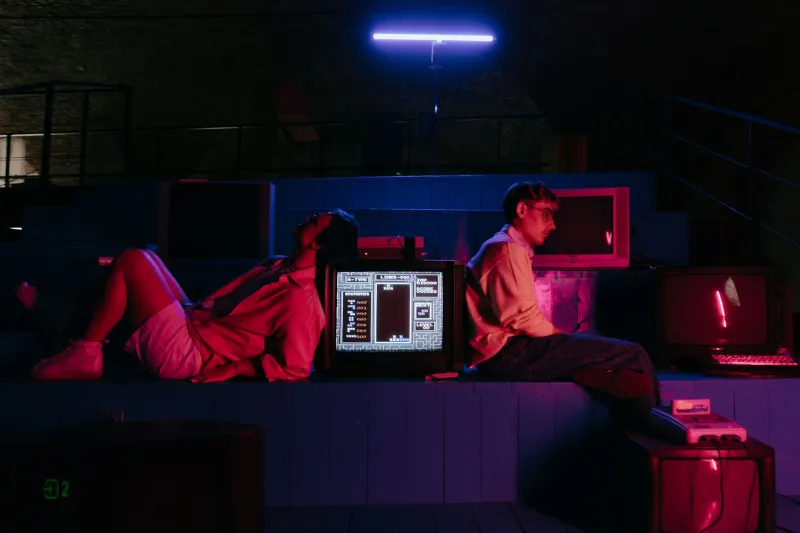
There's a certain irony baked into the current moment in digital art. Fiber optic connections are faster than ever. Storage is practically free. AI tools can conjure photorealistic imagery in under ten seconds. And yet some of the most compelling, most-talked-about visual work being made right now looks like it was squeezed through a 56k modem during a thunderstorm.
That's not an accident. It's a philosophy.
Call it the bandwidth aesthetic — a deliberate, almost aggressive embrace of technological limitation that's reshaping how a generation of creators thinks about what digital art is even supposed to do. Low color counts. Brutal compression artifacts. File sizes measured in kilobytes, not megabytes. These aren't mistakes being apologized for. They're choices being celebrated.
When the Ceiling Becomes the Canvas
To understand why constraint is having such a cultural moment, you have to understand what it's reacting against. The past decade of digital design has been defined by abundance — 4K textures, infinite layer stacks, cloud rendering pipelines that could process a feature film overnight. The result, critics argue, is a visual culture that's technically flawless and emotionally inert. Everything looks good. Nothing feels like anything.
Enter the constraint practitioners. Artists like Portland-based designer Mara Osei, who limits every project to a strict eight-color palette and a maximum file size of 64KB. Or the Brooklyn collective Null/Null, whose entire visual identity is built around images deliberately degraded through repeated JPEG compression cycles until the subject matter barely survives. Or Texas-based illustrator Dev Castillo, who creates all his work in a retired version of MS Paint — not as a gimmick, but because the software's limitations force decisions that more powerful tools let you defer indefinitely.
What these artists share isn't nostalgia. They're not pining for the dial-up era. They're using the logic of scarcity to generate creative pressure that abundance simply doesn't produce.
"When you can do anything, you have to decide everything," Castillo said in a recent interview with a Texas arts publication. "When you can only do a few things, the work decides itself. There's this clarity that kicks in."
The Compression Artifact as Aesthetic Event
One of the most interesting sub-movements within this broader trend is the deliberate use of compression artifacts — those blocky, pixelated distortions that occur when image files are compressed beyond their tolerance. In mainstream digital design, artifacts are errors to be eliminated. In bandwidth-aesthetic work, they're texture, atmosphere, emotional information.
Artists working in this vein will run an image through multiple rounds of lossy compression, watching the original degrade into something stranger and more resonant with each pass. The subject bleeds into the background. Colors smear. Edges dissolve. What you're left with is something that feels less like a photograph and more like a memory — imprecise, slightly wrong, haunted by its own deterioration.
This isn't just visual experimentation for its own sake. There's a genuine argument being made about what digital images mean in an era of algorithmic overproduction. When AI can generate a thousand technically perfect images in the time it takes a human to sketch a rough concept, the artifact-laden, obviously-labored image becomes a kind of proof of work. The imperfection is the authenticity.
Fewer Colors, More Signal
The reduced-palette movement operates on similar logic, but with different visual results. Working within the constraints of early computing color systems — 16-color CGA palettes, Game Boy four-shade greens, the 256-color limitations of early web graphics — forces a kind of visual problem-solving that unlimited color access makes unnecessary.
When you can only use sixteen colors, every color choice carries enormous weight. Contrast becomes a precision instrument. Composition has to work harder because atmospheric gradients and subtle tonal shifts aren't available. The result, at its best, is work that reads with a clarity and immediacy that photorealistic digital art often lacks.
Chicago-based artist Yemi Adara has built a significant following working exclusively in Game Boy palette — four shades of green-gray, nothing else. Her subject matter ranges from cityscapes to portraiture to abstract geometry, all filtered through that same brutal four-tone constraint. The limitation, she's argued, creates a consistent visual voice that would be impossible to maintain if she had access to the full spectrum. The restriction is the style.
Why Unlimited Resources Produce Limited Art
There's a concept in cognitive science called "overchoice" — the phenomenon where too many options actually impairs decision-making rather than improving it. Creative professionals have understood this intuitively for decades, which is why so many artists impose artificial constraints on themselves even when they don't have to. Word count limits. Single-instrument compositions. Monochromatic photography. The constraint isn't about the constraint itself; it's about what the constraint forces.
The bandwidth aesthetic takes this principle and applies it specifically to the language of digital technology. By working within the limits of older, simpler, or deliberately degraded systems, these artists are forcing themselves to solve visual problems that modern tools have essentially automated away. And in solving those problems — really solving them, not outsourcing them to a render engine — they're producing work that carries a different kind of intellectual and emotional weight.
This is also, not coincidentally, work that tends to transmit differently. A 64KB image loads instantly on any connection, anywhere. A piece designed for the constraints of an old CRT monitor looks intentional and strange on a modern 4K display. Work made within technological limits has a weird relationship with the technology it's displayed on — it doesn't quite fit, and that friction is part of the meaning.
Scarcity as Stance
There's a political dimension here too, one that fits neatly with the progressive sensibility of a lot of the artists working in this space. In a digital economy defined by the relentless accumulation of resources — data, processing power, storage, bandwidth — choosing to work within severe limitations is a kind of refusal. It's a statement that more isn't always better, that the race toward infinite capability is producing diminishing creative returns, that the most interesting work might be happening in the margins of the system rather than at its bleeding edge.
It's also, practically speaking, more accessible. Work that functions within tight technical constraints is work that anyone can see, on any device, in any bandwidth environment. There's something genuinely democratic about art that doesn't require a high-end machine to load.
The bandwidth aesthetic isn't going to displace high-production digital art any more than lo-fi hip hop displaced mainstream pop. But it's doing something that the mainstream can't — it's making creative limitations feel like the most interesting place to be. And in a moment when unlimited resources have somehow produced a creative landscape that feels increasingly generic and interchangeable, that's not a small thing.
Sometimes the signal is better when it's breaking up.