Dead Air Is Alive: The Sound Artists Turning Abandoned Frequencies Into Something Haunting
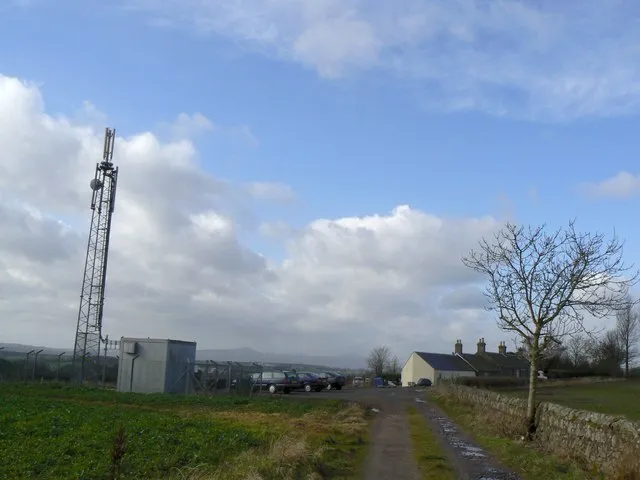
Photo: James Allan, CC BY-SA 2.0, via Wikimedia Commons
There's a frequency sitting between 530 and 1700 kHz that nobody's really supposed to be listening to anymore. AM radio is dying — slowly, publicly, without much ceremony. Most of those channels are either selling gold coins to retirees or broadcasting in total silence. But a loose constellation of sound artists across the US has decided that silence isn't nothing. It's raw material.
Call it dead-channel composition. Call it electromagnetic archaeology. Whatever you call it, it's becoming one of the more fascinating creative movements operating right now in the space where experimental music, installation art, and media theory all crash into each other.
The Void Has a Texture
When Brooklyn-based sound artist Mara Solène set up a modified shortwave receiver in a warehouse in Bushwick two years ago and started recording what she described as "the breathing between stations," she wasn't expecting to build a twelve-hour installation out of it. But the recordings had something in them — a kind of static that wasn't random, that carried residue. Old carrier waves. Harmonic interference from towers that had been dark for decades. "The electromagnetic spectrum has memory," she told a small audience at an art space in Ridgewood. "These frequencies were used. They were filled. That use leaves a mark."
This idea — that dead bandwidth retains some imprint of its former life — sits at the philosophical center of the movement. It's not mysticism, exactly. It's closer to a materialist reading of media infrastructure. Signals don't just disappear when a station goes off the air. The physical architecture — the towers, the cables, the interference patterns baked into the landscape — persists. And the artists working in this space are treating that persistence as a kind of found text.
Digging Through the Broadcast Graveyard
The tools these artists use are a mix of the obsolete and the cutting-edge. Modified analog radios. Software-defined radio (SDR) dongles that turn a laptop into a spectrum scanner capable of monitoring hundreds of frequencies simultaneously. Ferrite antennas salvaged from old portable TVs. Some artists have gone further, acquiring decommissioned broadcast equipment from stations that shuttered during the last decade of consolidation — the same wave of mergers and buyouts that gutted local radio across the American Midwest and South.
Chicago collective Static Meridian has been documenting abandoned TV transmission infrastructure along the old UHF band — the frequencies that used to carry local independent stations before the digital transition wiped them out in 2009. Their ongoing project, Channels That Aren't There, involves field recording sessions at former transmitter sites, capturing whatever residual electromagnetic activity lingers near decommissioned towers. The results get layered into long-form drone compositions that the group releases in limited runs on cassette and occasionally performs live, using the SDR feeds as a live instrument.
"There's something genuinely eerie about standing next to a tower that used to broadcast cartoons on Saturday mornings and is now completely silent," says one of the collective's members, who goes by the name Telx. "But it's not quiet. The land around it is still buzzing. There's still something happening."
Numbers Stations and the Original Avant-Garde
It's worth noting that this movement has a weird, deep prehistory. Numbers stations — those mysterious shortwave broadcasts of synthesized voices reading strings of numbers, widely believed to be covert government communications — have fascinated outsider artists and musicians for decades. The Conet Project, a four-disc compilation of numbers station recordings released in 1997, became something of a cult artifact, sampled by Wilco on Yankee Hotel Foxtrot and endlessly referenced by experimental musicians. That lineage matters here. The current generation of dead-frequency artists is consciously building on a tradition that understood the radio spectrum as inherently uncanny — a space where the official and the clandestine, the functional and the ghostly, have always coexisted.
What's different now is the accessibility. SDR hardware that would have cost thousands of dollars in the nineties can be purchased for under thirty bucks. Free software like GNU Radio and SDR# has democratized spectrum monitoring to a degree that would have seemed absurd even fifteen years ago. The electromagnetic graveyard is open to anyone with a USB dongle and a laptop.
Installations That Make You Feel the Frequency
Beyond recorded compositions, the movement has produced some genuinely striking installation work. Los Angeles artist Dex Foreman built a piece for a gallery in Culver City that invited visitors to walk through a room filled with twelve antennas, each tuned to a different dead or dying frequency, each feeding into a speaker that translated the electromagnetic activity into sound in real time. The piece shifted constantly — weather, solar activity, passing vehicles, and the RF noise generated by the gallery's own electronics all affected what the room sounded like. No two visits were identical.
The critical reception was polarizing in the best possible way. Some reviewers called it pretentious ambient noise. Others argued it was one of the more genuinely immersive sensory experiences they'd had in a gallery in years. Both camps were probably right.
What We're Really Listening To
There's a cultural argument embedded in all of this that goes beyond aesthetics. The American media landscape has shed an enormous amount of local broadcast infrastructure over the past twenty years. Thousands of local radio stations have been swallowed by conglomerates, automated, or simply abandoned. The digital transition killed off hundreds of UHF TV channels. Entire swaths of the electromagnetic spectrum that once carried the texture of specific communities — local news, regional music, church broadcasts, high school sports — are now dark.
The artists working in dead frequencies are, among other things, making that loss audible. Not in a sentimental way. Not in a "bring back local radio" way. More in the way that ruins make the past legible — not by reconstructing it, but by letting you feel the shape of what's gone.
The void, in other words, is a record. These artists are just learning how to play it.