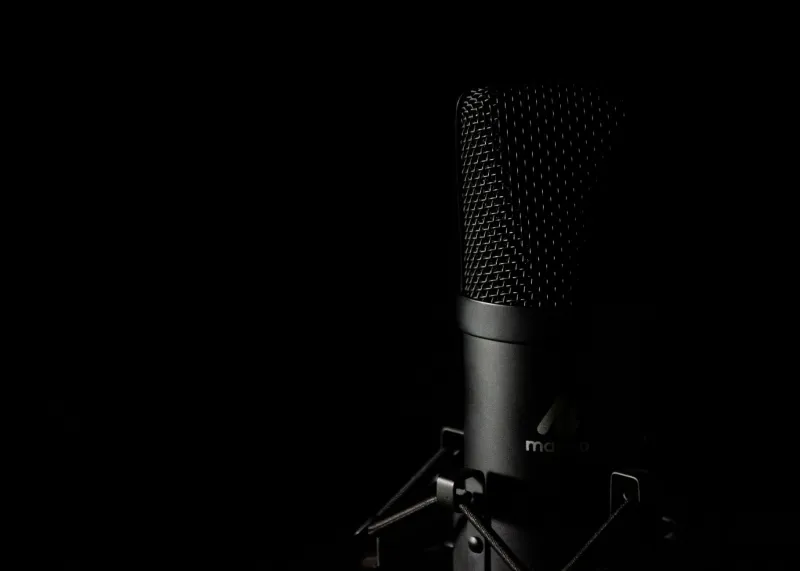
Gone by Morning: The Streamers Betting Everything on TV You Can't Rewatch

Photo: Steve from washington, dc, usa, CC BY-SA 2.0, via Wikimedia Commons
At 8:58 p.m. Eastern on a Thursday, a countdown appears on a bare black page. There is no thumbnail grid, no up-next rail, no trailer. At 9:00, a title card flickers: NIGHT SIGNAL, EPISODE 06. For the next 43 minutes, a few hundred people watch a scratchy, hand-shot variety show about insomnia, surveillance, and the smell of a 24-hour laundromat. Then the stream cuts to black. The page reloads to a single sentence: This broadcast is over. No replay. No clip. No library.
Welcome to the one-night-only channel, a small but growing corner of indie streaming where the product is not a show but an appointment. Creators build entire broadcasts—live plays, experimental talk shows, animated shorts, music videos, weather reports from nowhere—that exist for one airing and then disappear. No VOD. No YouTube upload. No algorithmic afterlife. If you missed it, you missed it.
The Anti-Library
Streaming trained us to expect the opposite. Every service is a vault; every show is a back catalog entry; every moment can be paused, rewound, screenshotted, clipped, and reposted. The one-night-only channel flips that default. It borrows the oldest rule of broadcast TV—if you weren’t there, too bad—and applies it to a generation that has never really had to miss anything.
These shows are not anti-access snobbery, at least not always. The creators I spoke with describe the no-replay rule as a creative constraint and a social contract. One Brooklyn duo behind a quarterly broadcast called Night Signal says the vanishing act forces them to edit for the room, not the archive. Jokes land or they don’t. A dropped cue becomes part of the night. The audience can’t skim ahead or rewatch the good part; they have to sit with the whole weird thing.
Scarcity as Status
In a feed where everything is available forever, presence becomes the flex. A ticket to a live one-off is a small proof that you were paying attention at the right time. Viewers organize watch parties in Discord, live-post timestamps, and trade frantic recaps afterward. Some creators sell a cheap ticket or ask for a pay-what-you-can donation; others gate the link behind a mailing list. The economics are modest, but the emotional payoff is real. The algorithm cannot recommend what does not exist.
The Tech Behind the Disappearing Act
Most of these broadcasts run on tools that were never designed for permanence. A creator can stream to a private page with RTMP, kill the embed when the show ends, and leave behind nothing but a dead URL. Others use YouTube Live or Twitch with the archive disabled, or build a custom player that refuses to record. The tech is not foolproof—screen capture exists—but it changes the default. The show is a moment, not an asset.
That distinction matters to the creators. Several said they were tired of making work that immediately became content, chopped into clips and ranked by engagement. The no-replay rule restores a little danger. It also makes the live audience complicit. If you are there, you are part of the only version that will ever exist.
The Recording Problem
Of course, people record. They always have. The difference is that the culture around these broadcasts treats capture as a breach, not a right. Some creators ask viewers to put phones down; others lean into the futility and build shows that would look terrible as a screen recording—live cue calls, room-specific stunts, time-sensitive phone numbers. A few release a transcript or a still image after the fact, a ghost of the event. The absence is the point. It turns watching into a kind of performance: you are not consuming content, you are attending something.
Who Gets to Be There
Ephemerality has a cost. Time zones, work schedules, caregiving, disability, and bad Wi-Fi all decide who can show up. The most thoughtful creators are trying to solve for that without turning the broadcast into a permanent product. Live captions, a second airing at a friendlier hour, and low-bandwidth audio streams are becoming common. The rule is not cruelty for its own sake; it is a deliberate return to liveness in a culture that has made everything available and, in the process, made very little feel urgent.
The Thing You Can’t Scroll Past
Maybe that is why the one-night-only channel feels less like a gimmick and more like a correction. It restores the sweaty, imperfect, shared clock of old TV without the cable package. It makes the screen feel like a place where something might happen—and then stop happening. In a media landscape built on infinite replay, the most radical feature is an ending.