Broken on Purpose: Why the Art World Fell in Love with Corrupted Data
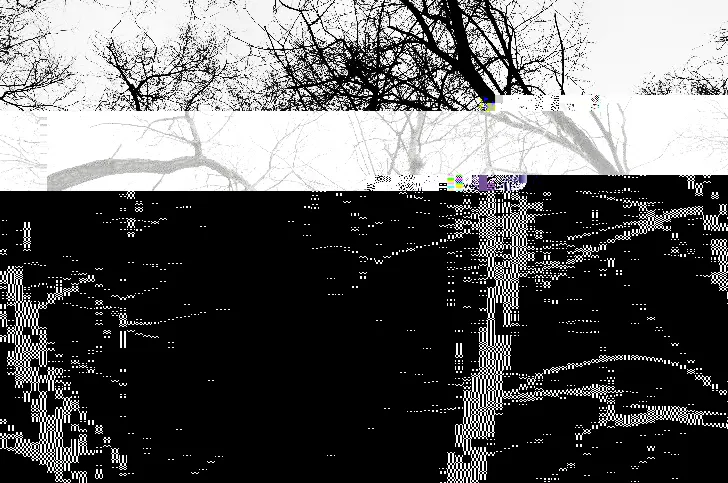
Photo: Lucas Rafael Tenllado Gil, CC BY-SA 4.0, via Wikimedia Commons
There's a moment — you've probably experienced it — where a streaming video freezes mid-frame, fractures into a mosaic of wrong-colored squares, and for just a split second before you slam the refresh button, something genuinely beautiful happens. The image becomes something else entirely. Something alien. Something that feels, weirdly, more honest than the polished content it was trying to deliver.
Glitch artists noticed that moment decades ago. They just refused to look away.
Static as a Starting Point
The glitch aesthetic — broadly defined as the deliberate harvesting of digital errors, compression artifacts, data corruption, and signal breakdown to make art — didn't emerge from fine art institutions or MFA programs. It crawled out of early internet culture, demoscene communities, and the experimental fringes of electronic music. Artists like Rosa Menkman, whose 2011 Glitch Studies Manifesto essentially codified the movement's philosophy, argued that glitches aren't interruptions to digital experience. They are digital experience — raw, unfiltered, and structurally honest about the machines producing them.
Menkman's central provocation still resonates: mainstream media culture is obsessed with seamlessness, with the illusion that technology is invisible, neutral, and frictionless. Glitch art refuses that illusion. It drags the infrastructure into the frame and makes you look at it.
In the US, that manifesto landed in fertile territory. A country simultaneously addicted to and deeply suspicious of its own tech apparatus was primed to embrace an art form that made Silicon Valley's clean surfaces look like a lie.
The Practitioners Bending the Signal
Walk into the right gallery in Brooklyn or scroll deep enough into the right corner of Instagram, and you'll find artists doing genuinely strange things to digital files. Databending — the practice of opening image or audio files in software they weren't designed for, letting the program misread the data and produce unpredictable visual or sonic mutations — is practically a cottage industry at this point.
Artist and musician Shawné Michaelain Holloway uses glitch methodologies to interrogate race, power, and digital identity, creating work where the visual corruption mirrors social fractures. Her pieces don't feel like accidents. They feel like arguments.
On the music side, the lineage runs from early Oval (who famously made albums by scratching CDs and recording the errors) through to contemporary noise and vaporwave producers who treat corrupted audio samples the way jazz musicians treat blue notes — as the most expressive tones in the scale. The microgenre of "broken transmission" music, which deliberately degrades samples into something between recognizable and disintegrated, has accumulated a dedicated following on platforms like Bandcamp that mainstream Spotify algorithms would never surface.
Then there are the video artists running footage through analog-to-digital converters repeatedly, each pass introducing new degradation, each iteration drifting further from the source material until what you're watching is pure noise with a ghost of an image underneath. It's hypnotic in a way that 8K resolution never quite manages.
Beauty in the Breakdown
The philosophical underpinning here is worth sitting with, because it's more sophisticated than "broken stuff looks cool."
Glitch art operates in the tradition of what theorist Sianne Ngai calls "ugly feelings" — aesthetic experiences that don't resolve into pleasure or catharsis but instead sustain a productive discomfort. When you look at a heavily corrupted image, your brain is doing real work. It's trying to pattern-match, trying to reconstruct what the image should be, and failing. That cognitive friction is the experience. You can't passively consume glitch art the way you can scroll past a beautiful photograph.
There's also something genuinely political about it. In an era of AI-generated imagery that can produce photorealistic faces, landscapes, and events that never happened, glitch art asserts the opposite value: the error as proof of process, the artifact as evidence of a real machine doing real (failing) work. It's anti-deepfake in its DNA. The corruption is the authenticity.
From Underground to Auction Block
Predictably, the mainstream caught up. Glitch aesthetics have been co-opted by fashion brands, music video directors, and social media filter designers who want the look of technological failure without the philosophical weight. You've seen it — that trendy VHS distortion filter on Instagram Reels, the chromatic aberration slapped on a brand logo to make it feel "edgy."
The glitch art community's response to this has been, depending on who you ask, either resigned or defiant. Some practitioners argue that commodification is inevitable and irrelevant — the ideas survive the aesthetic. Others have deliberately pushed their work further into genuinely uncomfortable territory that no marketing department would touch.
The NFT boom of 2021 briefly made glitch artists extremely visible (and, for some, extremely wealthy), though the subsequent crash complicated that story considerably. What it did prove is that there's a significant audience willing to pay serious money for work that operates outside conventional beauty standards.
The Signal Keeps Breaking
What's most interesting about glitch art in 2024 is where it's heading. As AI-generated content floods every corner of the internet with uncanny perfection, the appetite for work that is visibly, defiantly imperfect is only growing. Younger artists are combining glitch methodologies with generative AI — deliberately corrupting AI outputs, feeding AI systems broken data, using the machines against themselves to produce something neither purely human nor purely algorithmic.
It's messy. It's weird. It's occasionally genuinely disturbing.
In other words, it's exactly what the moment calls for.
The glitch has always been where the interesting stuff happens — that fracture between what the system promised and what it actually delivered. Art has always lived in that gap. The practitioners working in this space are just honest enough to stay there.